


E-Space
Sorbonne University Abu Dhabi

Menu

Apply Now

SDG 13: Climate Action

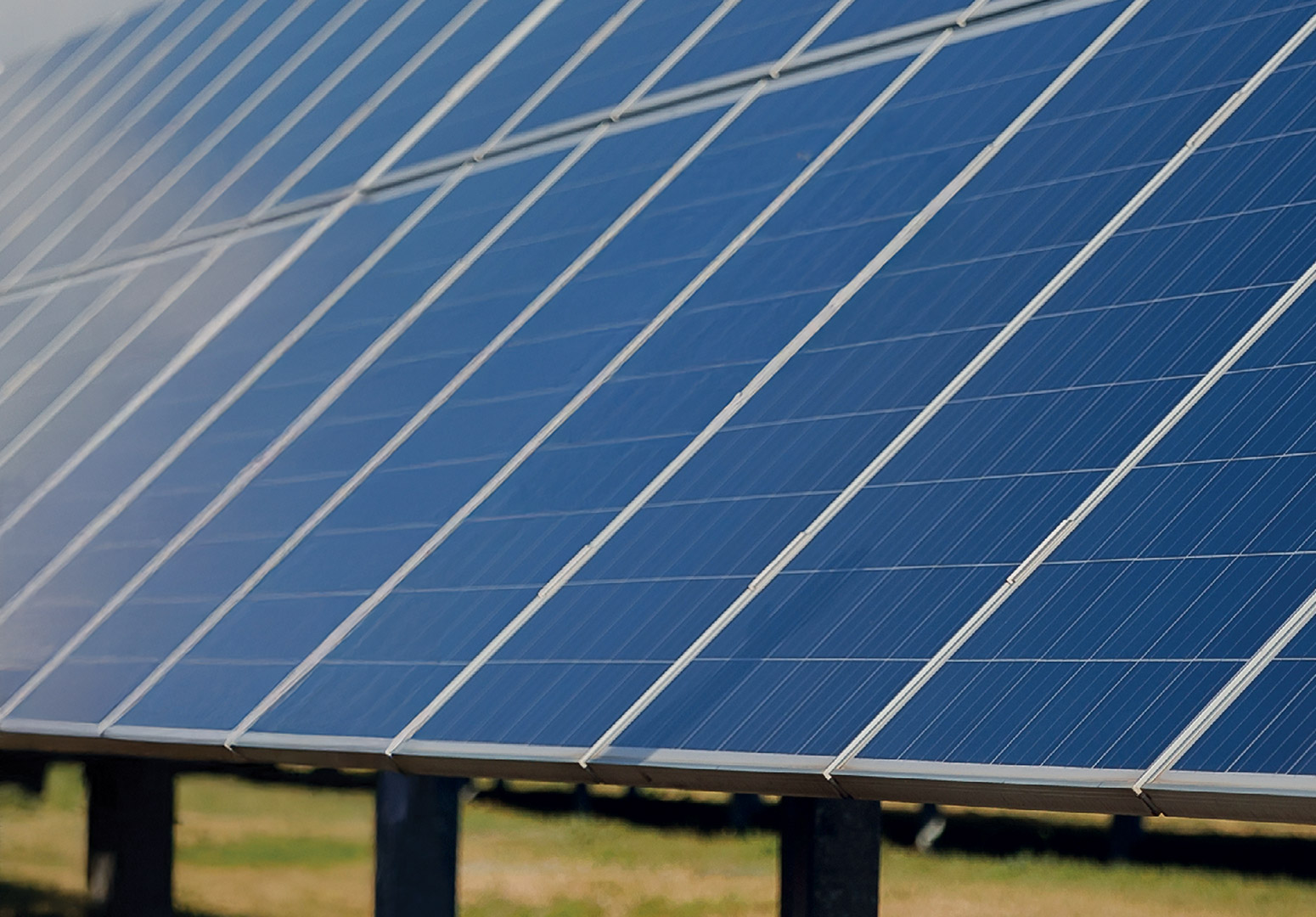
Sorbonne University Abu Dhabi actively monitors its total energy consumption, aiming to maximise the share sourced from low-carbon alternatives. It implements local education programmes focused on climate issues, fostering awareness and engagement among students and the community. The university’s shared Climate Action Plan outlines its commitments and initiatives, including cooperative planning for climate change disasters and collaboration with government agencies to inform and support policy decisions. Additionally, partnerships with NGOs enhance its environmental education efforts. Sorbonne University Abu Dhabi is firmly committed to becoming carbon neutral, with clear timelines set for achieving this goal across all operational scopes, underscoring its resolve to contribute to a sustainable future. 

Developing green agreements

Sorbonne University Abu Dhabi has also been developing a network of green partners to support its initiative with universities, governmental entities, and the private sector.


In 2023, The university became a member of the Universities Climate Change Network (UCN), comprising 12 higher education entities, co-chaired by NYUAD and the UAE Climate Change Special Envoy. 


A Memorandum of Understanding (MoU) was signed with the Environment Agency—Abu Dhabi to foster collaboration in research and development. This partnership was further strengthened when the university became one of the eight founding members of the Abu Dhabi Environmental Research Network (ADERN), an initiative led by the Environment Agency—Abu Dhabi. This affiliation positions Sorbonne University Abu Dhabi at the forefront of cross-collaborative environmental research. 

RECAPP by Veolia became the preferred partner of Sorbonne University Abu Dhabi, sponsoring the “Green Dictation” public event and serving as the university’s provider of recycling bins on campus. 

Sorbonne University Abu Dhabi

Sorbonne University Abu Dhabi

Sorbonne University Abu Dhabi

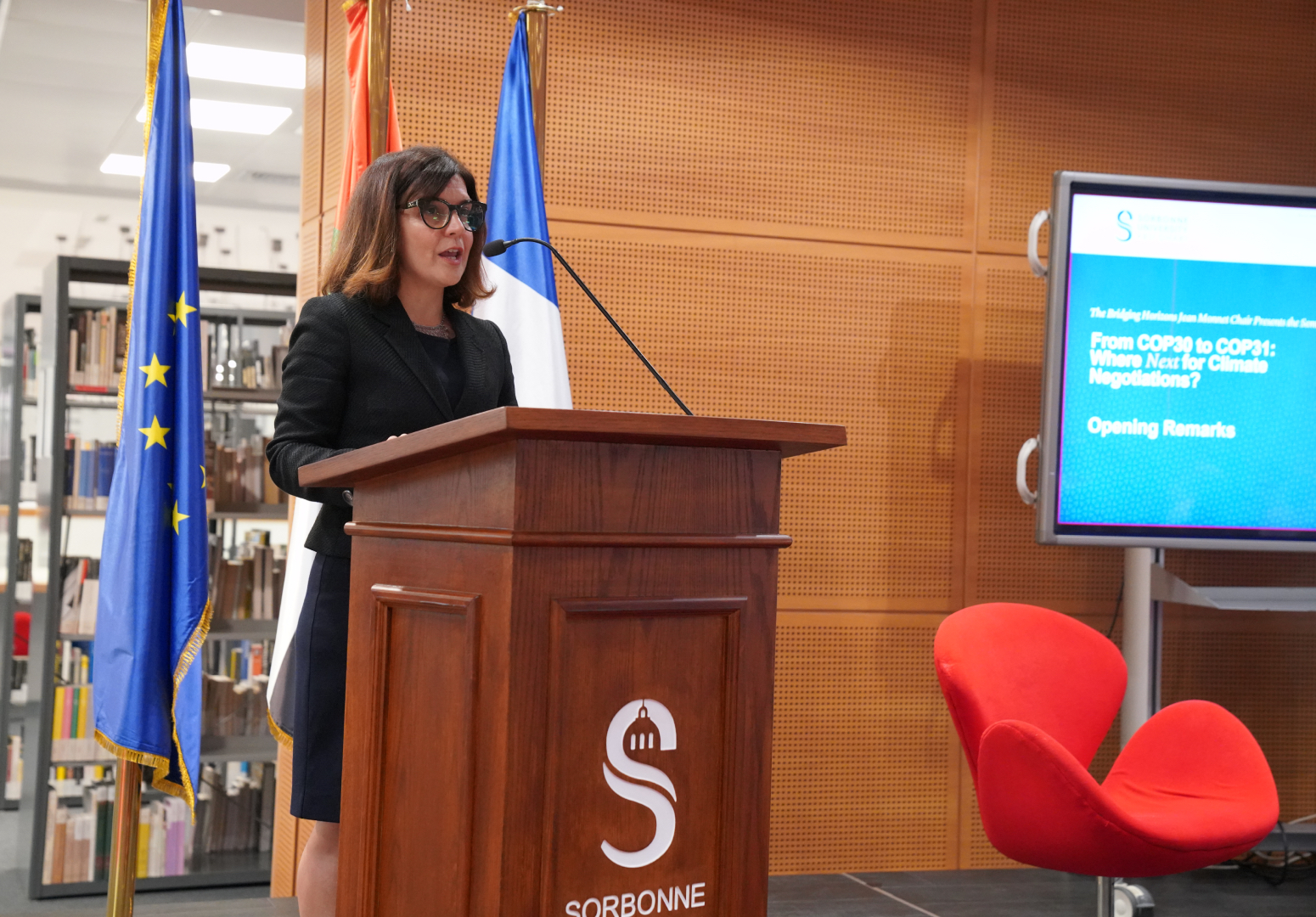
Conferences and events

  • Conference - Sustainability & ESG Impact: Vision, Strategy & Roadmap


  • Conference - Thinking, Preventing, and Managing Natural Risks


  • Workshop - Sustainability for Sceptics with Prof Marc Lepere: Is climate risk becoming financial risk?


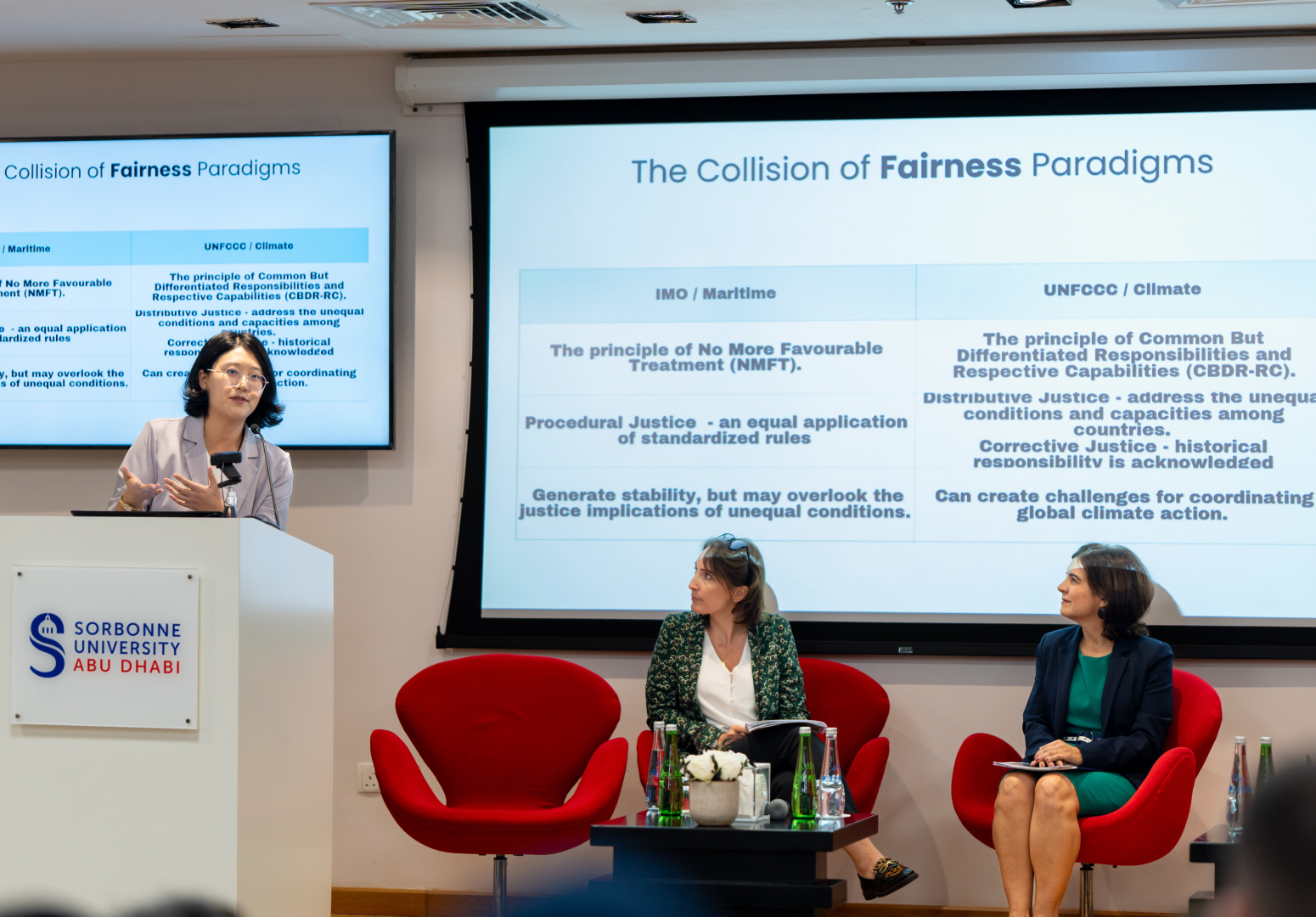
  • Maritime Decarbonisation – Ideas to Impact Roundtable

Our students’ commitment to sustainability

SUAD Sustainability Club

The Sustainability Club at Sorbonne University Abu Dhabi is dedicated to promoting environmental awareness and sustainable practices within the university community. Through various initiatives, events, and projects, the club engages students in discussions about climate change, conservation, and sustainable living. It serves as a platform for members to collaborate on projects that encourage eco-friendly habits, raise awareness about sustainability issues, and foster a sense of responsibility towards the environment. 

Research and publications on climate action

- Beveridge, I.; Yamokoski, J. (2026). Cross-disciplinary Technology Innovation for Advancing the Blue Economy. Strategies for Sustainability: Global Perspectives. https://doi.org/10.4324/9781003500070-9


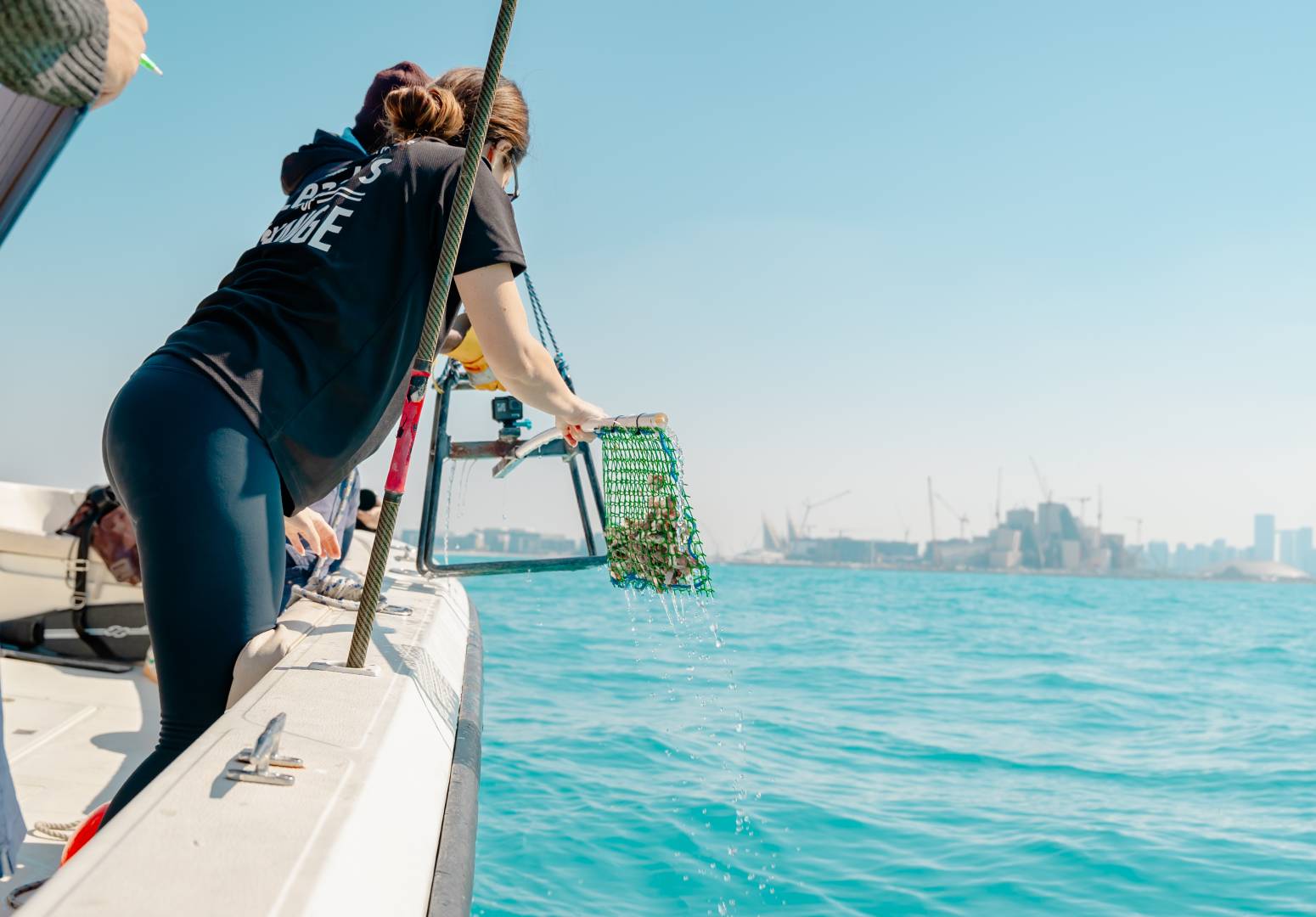
- Jung, J.-L.; Haderlé, R.; Cosnier, K.; Al Musallami, M.; Al Mehairbi, S.; Perumal, P.; Al Hammadi, S.; Valentini, A.; Ung, V.; Prazuck, C.; Chaveneau, C.; Adam, O. (2026). First eDNA-based monitoring of marine vertebrates in the urban marine ecosystem of Abu Dhabi: Mangrove and seagrass beds as biodiversity reservoirs?. PLOS One. https://doi.org/10.1371/journal.pone.0352249


- Safe, S.; Benabdallah, N.; Arsalan, K. (2026). Integration of Urban Planning and Landscape Ecology: Case Study of Rabat, Morocco. Strategies for Sustainability: Global Perspectives. https://doi.org/10.4324/9781003500070-6


- Boubakri, S.; Abbassi, I.; Bouba, C.A. (2026). Leveraging carbon taxes to combat climate change: The role of technological change and financial development. Journal of Climate Finance. https://doi.org/10.1016/j.jclimf.2026.100083


- Beveridge, I.; Bukharina, L. (2026). The Role of International Organizations in Rising Consumer Environmental Awareness. Strategies for Sustainability: Global Perspectives. https://doi.org/10.4324/9781003500070-8

- Sasal, L.; Elabid, Z.; Cherif, E.; Busby, D.; Hadid, A. (2025). Advanced History Matching Workflow by Deep Learning Surrogates with Knowledge-Based Graph Neural Networks. Society of Petroleum Engineers - GOTECH 2025. https://doi.org/10.2118/224578-MS


- Abril, G.; Narayaninsamy, M.; David, F.; Chielle, R.; Le Moal, P.; Meziane, T. (2025). Carbon dioxide emissions from coastal waters and mangrove sediments in a microtidal bay under tropical monsoon climate (Martinique, Lesser Antilles). Estuarine, Coastal and Shelf Science. https://doi.org/10.1016/j.ecss.2025.109355


- Motte-Baumvol, J.; Mont'alverne, T.C.F.; Braga, G. (2025). Climate Change, Migration, and the Limits of EU Solidarity: Rethinking the Temporary Protection Directive. European Journal of Migration and Law. https://doi.org/10.1163/15718166-12340213


- Chaterera-Zambuko, F. (2025). Environmental Sustainability in the United Arab Emirates’ Digital Records Management Landscape: An Analysis of Strategies and Policies. Sustainability (Switzerland). https://doi.org/10.3390/su17146266


- Panja, M.; Das, D.; Chakraborty, T.; Ray, A.; Athulya, R.; Hens, C.; Dana, S.K.; Murukesh, N.; Ghosh, D. (2025). Forecasting precipitation in the Arctic using probabilistic machine learning informed by causal climate drivers. Chaos (Woodbury, N.Y.). https://doi.org/10.1063/5.0297336


- Beveridge, I.; Prabhu, J.; Blackburn, K.; Berry, C. (2025). The influence of personal and pro-social concerns on consumers’ evaluation of meat substitutes. British Food Journal. https://doi.org/10.1108/BFJ-09-2024-0923

- Kayal, M. (2024). Double Impact: A Macroeconomic Study of the Crossed Influences Between Climate Change and Business Tourism. Law and Development Review. https://doi.org/10.1515/ldr-2023-0054


- Allahham, M.; Sharabati, A.-A.A.; Almazaydeh, L.; Sha-Latony, Q.M.; Frangieh, R.H.; Al-Anati, G.M. (2024). The impact of fintech-based eco-friendly incentives in improving sustainable environmental performance: A mediating-moderating model. International Journal of Data and Network Science. https://doi.org/10.5267/j.ijdns.2023.9.013


- Hadid, A.; Chakraborty, T.; Busby, D. (2024). When geoscience meets generative AI and large language models: Foundations, trends, and future challenges. Expert Systems. https://doi.org/10.1111/exsy.13654

- Glais, A.; Lespez, L.; López-Sáez, J.A.; Tsirtsoni, Z.; Virmoux, C.; Ghilardi, M.; Davidson, R.; Malamidou, D.; Pavlopoulos, K. (2023). Rapid climate changes and human dynamics during the holocene in the eastern mediterranean (Lower Strymon Valley, northern Greece). Quaternary Science Reviews. https://doi.org/10.1016/j.quascirev.2023.108130

- Leal-Arcas, R.; Al Zarkani, M.; Jbara, L.; Margaritidou, M.; Mubwana, R.M. (2022). The BRIC and Climate Change Mitigation. International Trade and Sustainability: Perspectives from Developing and Developed Countries. https://doi.org/10.1007/978-3-031-14068-6_6

- Ferdowsi, B.; Gartner, J.D.; Johnson, K.N.; Kasprak, A.; Miller, K.L.; Nardin, W.; Ortiz, A.C.; Tejedor, A. (2021). Earthcasting: Geomorphic Forecasts for Society. Earth's Future. https://doi.org/10.1029/2021EF002088
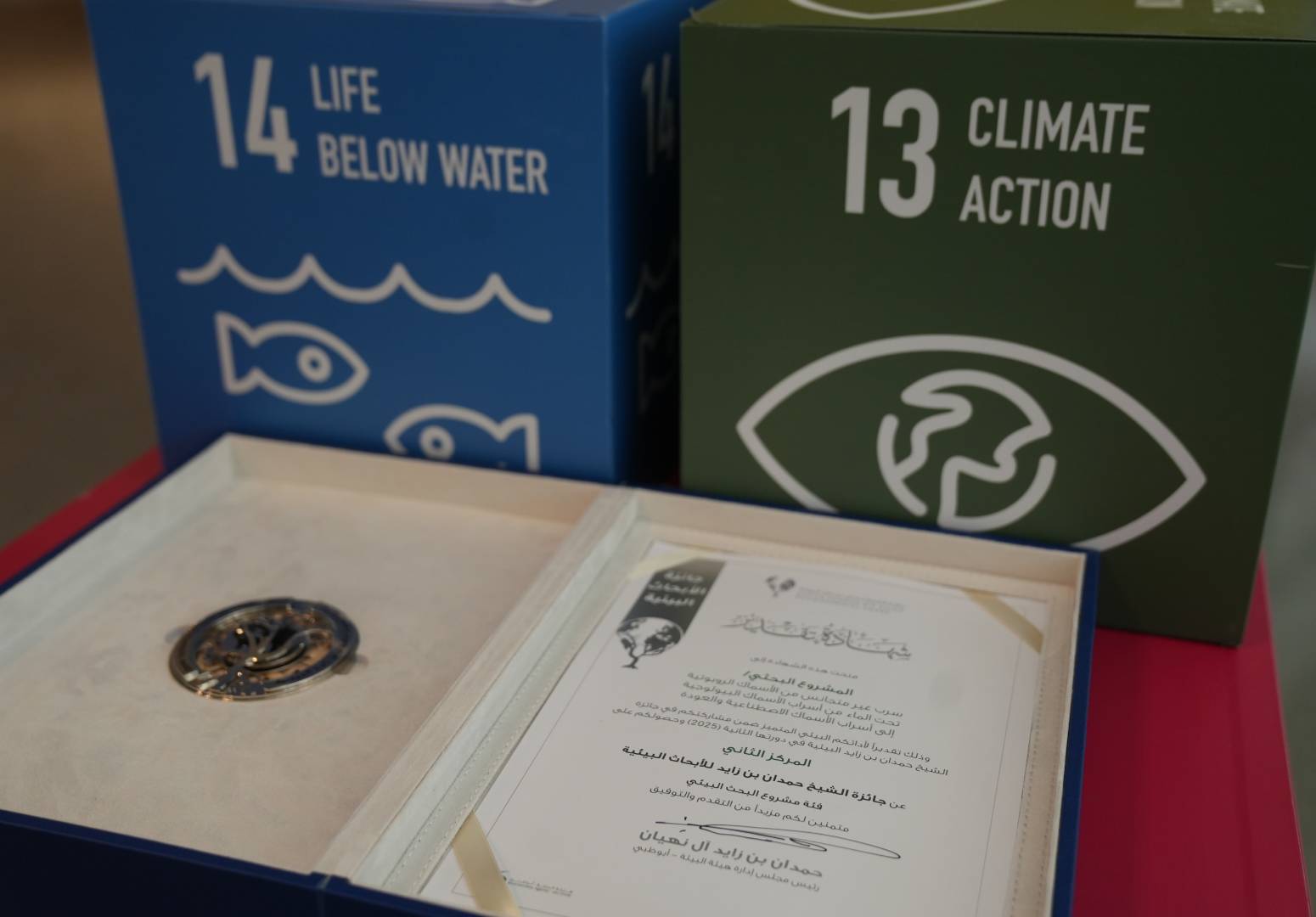
United Nations Sustainable Development Goals

Subscribe to

Our Newsletter

School of Arts and Humanities

Sorbonne University Abu Dhabi Sorbonne University Abu Dhabi

School of Data, Science and Engineering

Sorbonne University Abu Dhabi Sorbonne University Abu Dhabi

School of Law, Economics and Business

Sorbonne University Abu Dhabi Sorbonne University Abu Dhabi
E-Space
Sorbonne University Abu Dhabi

Close

Apply Now